Basement Waterproofing in Chicago, IL
A wet basement in Chicago, IL almost always has a cause someone can find. Send a few details through the short form and they go to one independent local contractor, who comes out, looks at the walls and drains, and writes up an estimate. This free referral service does no basement work.
Not sure if we cover your area? Check now ↓
Basement Estimate Request
Takes about 30 seconds. One local contractor gets it and contacts you.
Your details go to one independent contractor who works around Chicago, IL, and that contractor gets in touch with you directly. See our Referral Marketing Disclosure.
Basement Waterproofing in Chicago, IL, Explained Plainly
The typical Chicago home dates from around 1952. A damp wall might trace back to a downspout emptying beside the foundation, a crack in block or brick, a worn sump pump or a sewer pushing back in a storm. Telling those apart takes someone standing in the basement, so every request leads to a contractor's visit and a written estimate.
Chicago IL Basement Waterproofing is only the messenger. It holds no City of Chicago contractor license, never bids on or offers to do basement work, signs no contracts and stays out of insurance matters. The site's income, if any, is advertising that a contractor may buy, and that is a free trial right now. Homeowners are never charged and never receive anything in return.
One Request, One Clear Next Step
- Share what you're seeing. Use the short form to give your address and a line about where the water turns up.
- It reaches one contractor. A single independent company working in the Chicago area receives it, and nobody else.
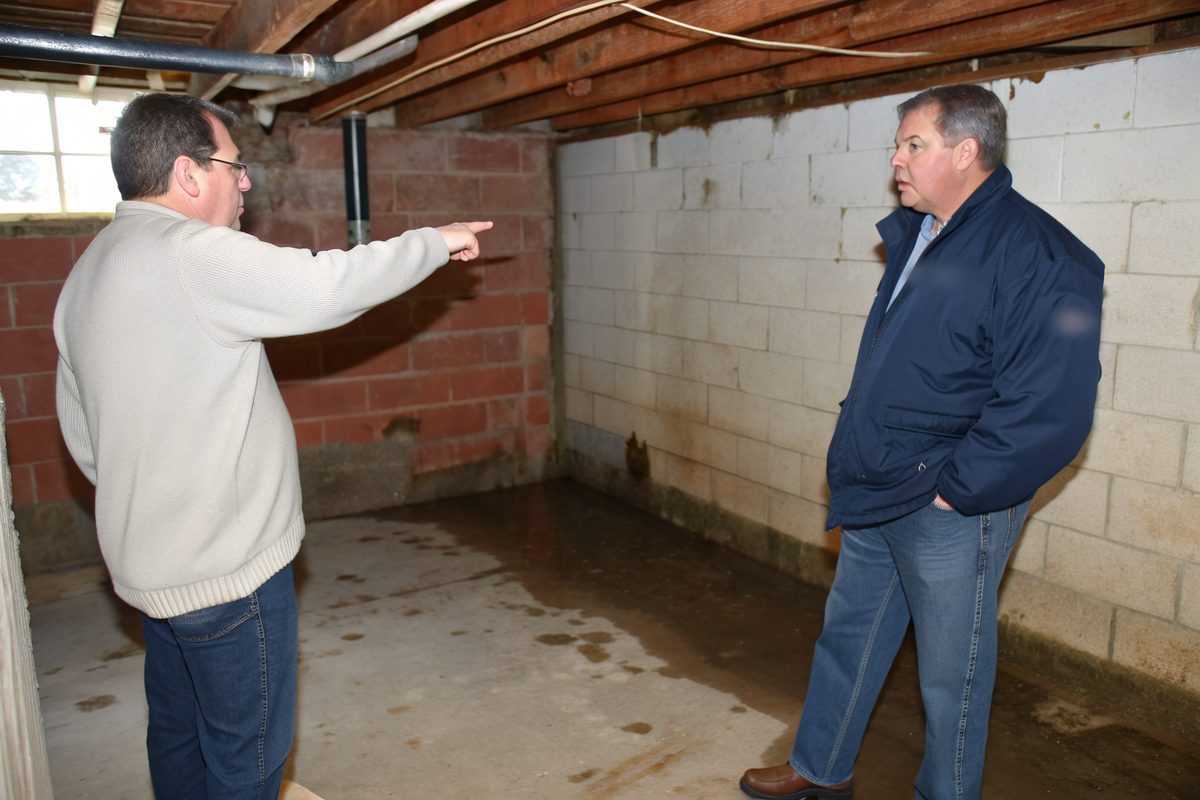
- The contractor visits. They check the walls, floor drains, downspouts and grade, then explain what seems to be going on.
- You decide on paper. Read the written estimate, look up the company's license and take your time.
Five Ways to Stop Basement Water
Signs Your Basement Needs Attention
- Wet edges where wall meets floor. A damp strip along that joint after rain usually means groundwater is being pressed in from outside.
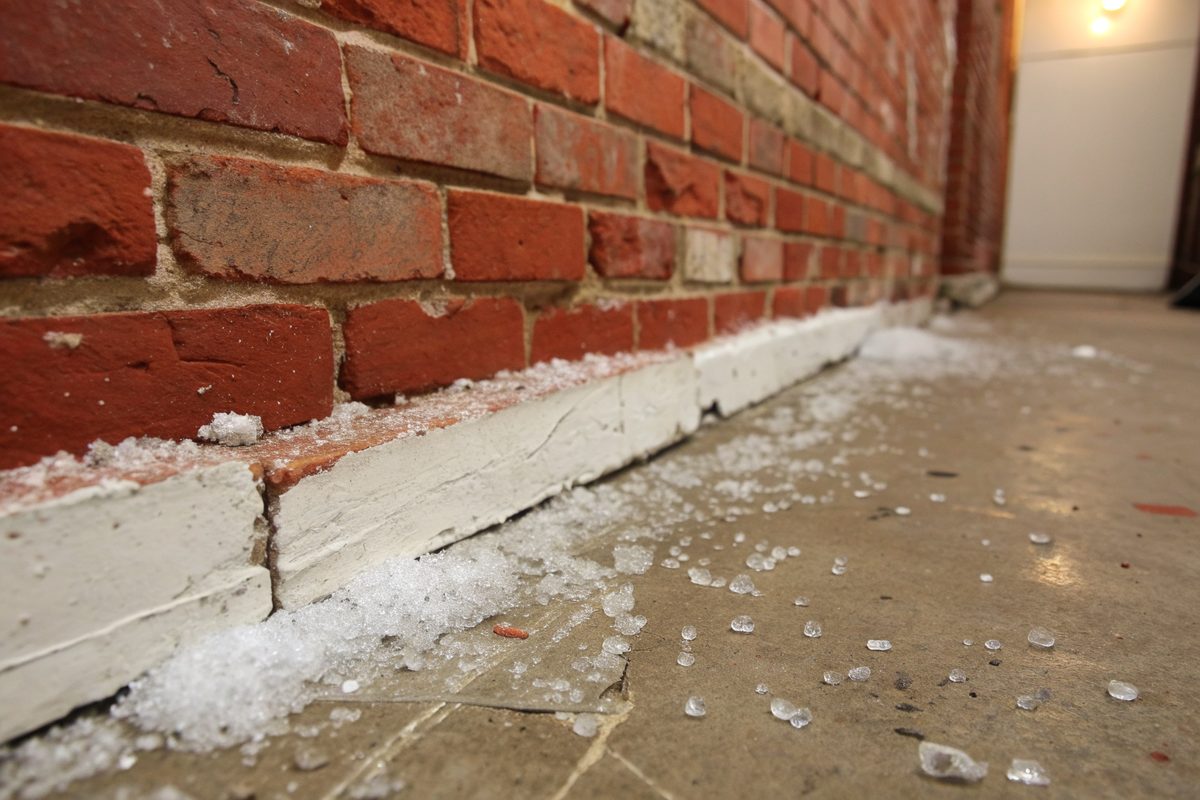
- Chalky white deposits. Water moving through brick, block or concrete leaves mineral salts on the surface as it dries.
- A crack that darkens after storms. Damp cracks let water in. A horizontal crack or a wall leaning inward is worth having looked at soon.
- A sump pump that never seems to rest. Nonstop cycling, or a pump that has died, can mean it faces more water than it was chosen for.
- Water coming up a floor drain. That points to a sewer backup rather than seepage, and in Chicago it gets reported to 311.
Not Sure What You Need?
The wet basement checker asks five quick questions, then suggests one of three next steps. It won't diagnose anything, but it helps you describe the problem later.
The Weather Behind Wet Basements
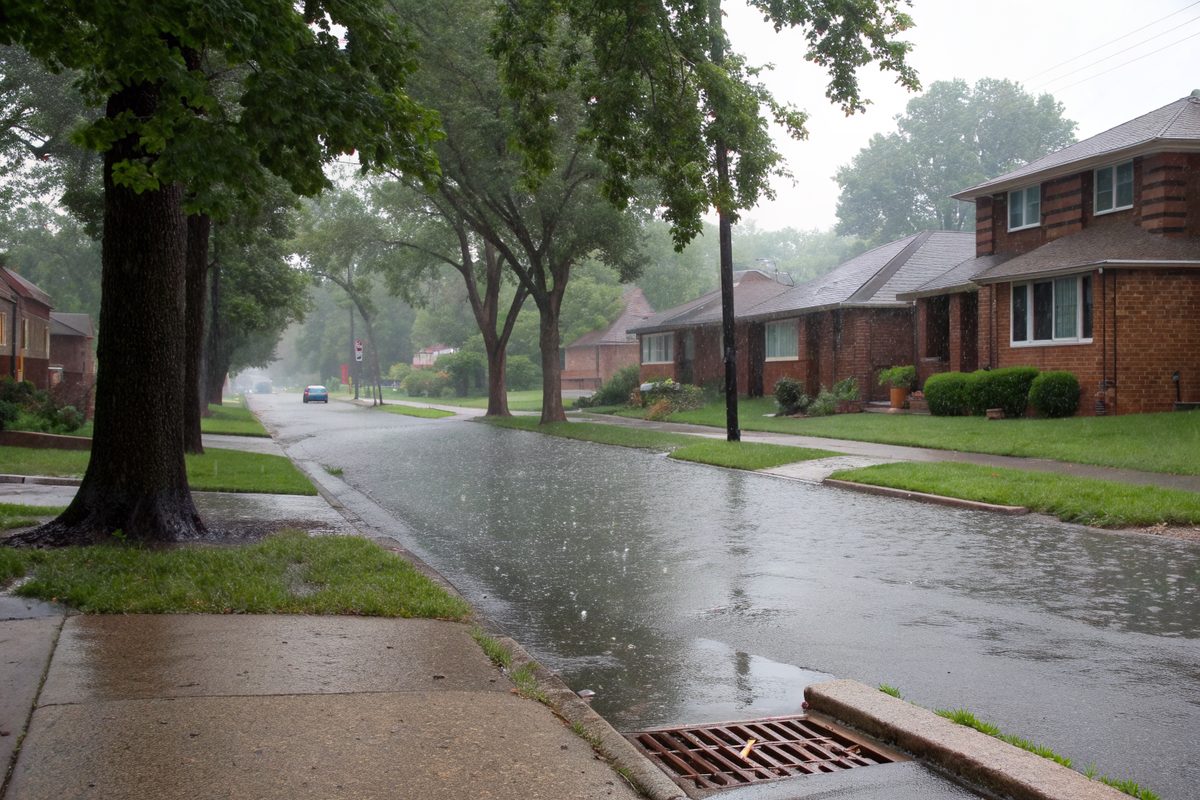
Much of Chicago sits on the flat bed of ancient Lake Chicago, where the Illinois State Geological Survey maps silt and clay. That clay can keep foundation walls wet for days after a storm, especially in spring thaw and summer downpours.
The National Weather Service measured 5.55 inches at O'Hare over April 17–18, 2013, a two-day April record. After nearly 9 inches fell just west of the city on July 2, 2023 (NWS), WBEZ counted more than 12,000 water-in-basement reports to 311 within two weeks, roughly four in ten from Austin. On April 14, 2026, O'Hare's 2.43 inches set a date record, and Norwood Park led the 600-plus complaints, the Chicago Sun-Times reported.
Water rising through a floor drain is a sewer issue, not seepage. Most of Chicago has combined sewers, where rain and household wastewater share pipes, so a big storm can force water back into basements. Report it to 311 (312.744.5000 from outside the city), saying whether it's clean or dirty. The pipe to the street sewer is the owner's to maintain. MWRD suggests a check valve or overhead sewer and disconnected downspouts, putting a backflow device at about $10,000 per household (2026); no citywide program helps pay.
What Waterproofing Costs in Chicago
These are Fixr's 2026 national ranges, not a Chicago price list; your number depends on your walls.
| Cost row | Figure | Source (year) |
|---|---|---|
| Typical basement waterproofing project | about $3,000 to $10,000 (average about $5,000) | Fixr national (2026) |
| Interior perimeter drain, per linear foot | $40 to $120 | Fixr national (2026) |
| Sump pump installation | $600 to $2,500 | Fixr national (2026) |
| Epoxy crack injection, per crack | $250 to $1,000 | Fixr national (2026) |
| Waterproof paint or sealant, per sq ft | $1 to $8 | Fixr national (2026) |
The cost guide explains what moves a price, and the calculator below gives a rough range.
Why Start With a Single Request
- Tell the story once. You describe the water to one company and skip repeating the same details to several.
- Details you can compare. The written estimate spells out drain length, pump model and discharge point.
- Checking stays with you. This site vouches for no one, so look up the City of Chicago license yourself.
Serving Chicago and Its Suburbs
Requests are welcome from the North Side lakefront to the bungalow blocks of the Southwest Side. Five Cook County suburbs have their own pages: Oak Park, IL to the west, Evanston, IL to the north, Park Ridge, IL to the northwest, and Oak Lawn, IL and Orland Park, IL to the southwest.

What Makes Chicago Basements Different
Chicago counts more than 80,000 bungalows, nearly a third of its single-family homes, most built between 1910 and 1940 with full basements (Historic Chicago Bungalow Association). CMAP, using Census data, dates about 39% of the city's homes before 1940.

What People Ask First
Does anyone from this site come out to look at my basement?
No. Its job is done when the request is handed to the contractor. Nobody from this site visits, looks over a basement or names a price; the contractor arranges the visit, writes the estimate and does any work you choose.
Water came up my floor drain. Do I need waterproofing?
Probably not for that. Water or sewage rising through a floor drain usually means a sewer backup, not seepage. In Chicago, report it to 311 and say whether the water is clean or dirty. In a suburb, contact your own village's public works department.
Will homeowners insurance pay for a wet basement?
That depends on the policy. Standard policies often leave out sewer backups unless a separate rider was added, and seepage is commonly excluded. Read your policy and ask your insurer or agent, ideally before any work begins. This site has no role with insurers and can't speak to coverage.
How can I check a contractor in Chicago?
Use the Department of Buildings' licensed-contractor search or ring 312.744.3449. Ask for proof of liability insurance and workers' comp. Plumbing needs a City-licensed plumbing contractor, and sewer work a licensed drainlayer. Over $1,000, Illinois requires a written contract and the "Home Repair: Know Your Consumer Rights" pamphlet.
Does basement waterproofing need a permit in Chicago?
Often. Sewer work needs a City sewer permit pulled by a licensed drainlayer, plumbing needs a permit too, and so does most building work. Whether drain tile or a sump alone does depends on the scope, so the contractor confirms permits with the Chicago Department of Buildings, 121 N. LaSalle Street. Agree in writing who pulls them.
Request an Estimate Today
Send the short form whenever it suits you. A single independent contractor will reach out about a visit, and whatever follows the estimate is your decision alone.